Loading...
Serving Burbank, CA and surrounding areas. (747) 268-3304
Liberty Burbank Tree Service provides emergency tree service, tree removal, and trimming for Sunland homeowners - from mid-century homes along Foothill Boulevard to hillside lots at the edge of the Angeles National Forest - with crews who understand foothill terrain and fire-season requirements.
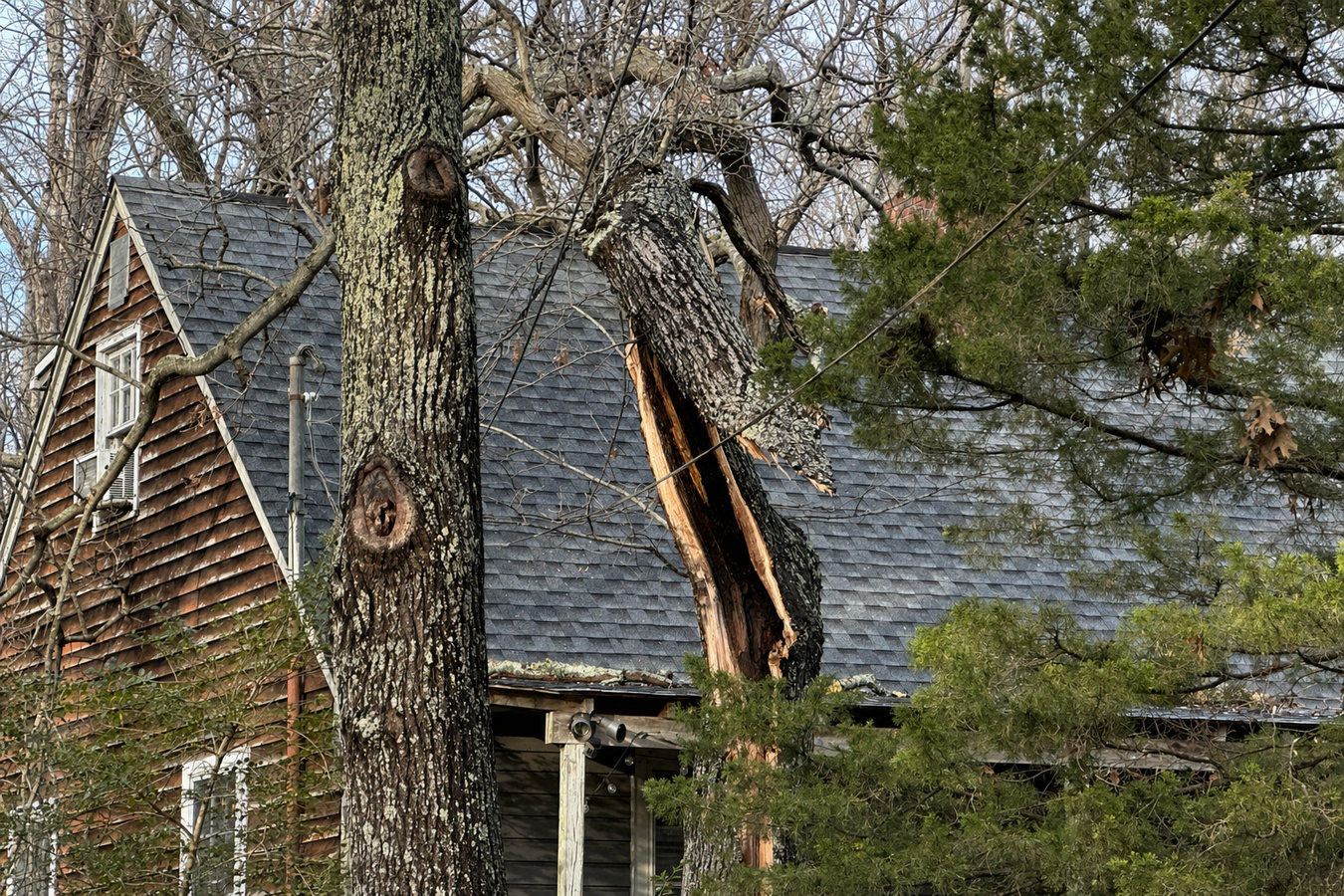
Santa Ana winds blow through the Sunland foothills with real force every fall, and trees on sloped lots are particularly vulnerable when canopies are heavy and root systems are stressed from the dry season. Our emergency tree service responds to downed trees and immediate hazards throughout the Sunland area.
Many Sunland homes were built in the 1930s through the 1960s, and the trees on those properties are now 60 to 90 years old. Trees of that age on foothill lots - where roots have been dealing with clay soil movement and earthquake activity for decades - often need removal before they fail on their own.
In Sunland, trimming before fire season is not just maintenance - it is part of the defensible space requirement for properties in fire hazard severity zones. Reducing canopy weight and removing dead branches close to the structure directly lowers fire risk and also reduces the chance of branch failure during wind events.
Older oaks and native species common on Sunland foothill properties have growth patterns that require careful structural pruning - not the heavy-handed topping that some crews use. Proper pruning by someone who knows these species keeps the tree healthy while improving clearance from the structure and reducing storm risk.
Stumps left on Sunland foothill lots create additional fire risk when they dry out and become fuel, and they can continue to harbor pests and fungal activity for years. Grinding below grade removes the hazard and allows the area to be replanted or used for another purpose.
Larger Sunland lots with overgrown vegetation near the structure often need more than trimming - a full clearing of brush, dead wood, and unwanted trees to meet defensible space standards before fire season. We handle these larger clearing jobs on both flat and sloped foothill properties.
Sunland sits at the urban-wildland interface, which changes the calculus on almost every tree service job in the neighborhood. The community borders the Angeles National Forest directly to the north, and most of the foothill properties here fall within a high fire hazard severity zone under California state designation. That means defensible space requirements from the California Department of Forestry and Fire Protection apply to vegetation around structures - a legal obligation, not just a recommendation. Dead trees, low-hanging branches within 10 feet of a chimney, and brush accumulated in the 100-foot zone around a home all create liability and fire risk that needs to be addressed before fire season each year.
Beyond fire season, the terrain itself shapes tree service work here in ways that do not apply to flat valley neighborhoods. Many Sunland properties sit on sloped or partially graded lots at the base of the San Gabriel Mountains, where hilly terrain limits equipment access and requires hand work in areas a chipper truck cannot reach. The clay-heavy foothill soils go through wet-dry expansion cycles that stress root systems on older trees, and the seismic activity common to the greater Los Angeles area adds to that instability over time. Foothill Boulevard - the main corridor through the neighborhood - runs east-west below most of the residential streets, which branch uphill in ways that can make routing large equipment a real planning exercise.
Our crew works throughout Sunland regularly, and we understand the local conditions that affect tree service work here. Sunland is a neighborhood within the City of Los Angeles, so permits and street-tree approvals go through the city rather than a Sunland-specific office - the same LA permitting structure that applies to other city neighborhoods but with the added layer of fire-zone vegetation requirements that apply specifically to this part of the city.
Foothill Boulevard is the main east-west road through Sunland, and most of the residential streets branch off it toward the hills. The 210 freeway runs to the south, connecting Sunland to Pasadena, the Glendale Freeway, and the broader San Fernando Valley. Properties near the Tujunga Wash - the flood-control channel running through the area - are in low-lying terrain where drainage after heavy winter rains is a real concern. Homes higher on the hillside, closer to where Mount Lukens rises above the neighborhood, tend to have more complex terrain and more direct wildfire exposure than lots along the flat commercial corridor.
We also serve North Hollywood, which connects to Sunland through the broader northeastern LA corridor, and Pasadena, accessible via the 210 to the east. If your job is near either of those areas, we can often schedule the same crew for the same day.
Reach us by phone or the contact form and we reply within one business day. For emergency situations in Sunland - a tree down after a wind event or a branch on a roof - call us directly so we can prioritize your job.
We come to your Sunland property, assess the tree, the terrain, access conditions, and any fire-zone considerations, then provide a written quote with no obligation. On hillside properties we account for slope and equipment access in the estimate.
For foothill properties where equipment access is limited, we plan the job in advance so the crew arrives with the right tools. You do not need to be present during the work unless you prefer it.
All wood, branches, and debris leave with the crew when the job is finished. On hillside Sunland properties, that includes material that may have moved downslope during the work - we do not leave debris for you to deal with.
We serve Sunland properties from the Foothill Boulevard corridor to the hillside lots at the edge of the forest. Written quote, no obligation, one business day response.
Sunland is a neighborhood in the northeastern corner of Los Angeles, tucked into the foothills of the San Gabriel Mountains where they meet the northeastern edge of the San Fernando Valley. Part of the larger Sunland-Tujunga community, it sits below the Angeles National Forest - one of the largest national forests in the country, covering more than 700,000 acres north of the city. Most homes in Sunland were built between the 1920s and the 1960s, when the area attracted working-class and middle-class families looking for larger lots and a quieter setting than central Los Angeles. The resulting housing stock is a mix of bungalows, ranch homes, and modest single-family houses, many on lots larger than what you find in flatland neighborhoods closer to downtown.
The community has a strong owner-occupied character and a tight-knit neighborhood feel, partly because of how geographically distinct it is from the rest of the city. Foothill Boulevard is the main commercial street, and the 210 freeway to the south connects Sunland to the broader metro area. The Tujunga Wash, a major flood-control channel, runs through the area and is a familiar local landmark. Mount Lukens - the highest point within the City of Los Angeles - rises directly above the neighborhood. Nearby Pasadena is accessible via the 210 to the southeast, and Burbank is to the west, connecting Sunland to the central part of the San Fernando Valley via the 5 and 134 freeways.
Professional tree care for businesses, HOAs, and commercial properties.
Learn MoreCall today or submit a request online - we reply within one business day, provide a written quote before any work begins, and know how foothill properties in Sunland are different from the rest of LA.